
When you repair your composite kayak, it's important that you use the correct materials, or…
Why you should tie down the bow and stern when transporting your kayak.
When you are transporting your kayak on a roof rack, it is important that it is tied down securely. Failure to do so can risk damage to your kayak, your car and other road users. Hopefully you already use a good quality roof rack, kayak carriers (where appropriate) and tie the kayak down with suitable tie downs. But what about adding a bow and stern tie down? It’s easy to think “my roof rack is rated to carry 75kg but my kayak weighs way less. Why would I need to tie it down more?”.
Here are some of the reasons why you should tie down the front and back of your kayak when travelling.
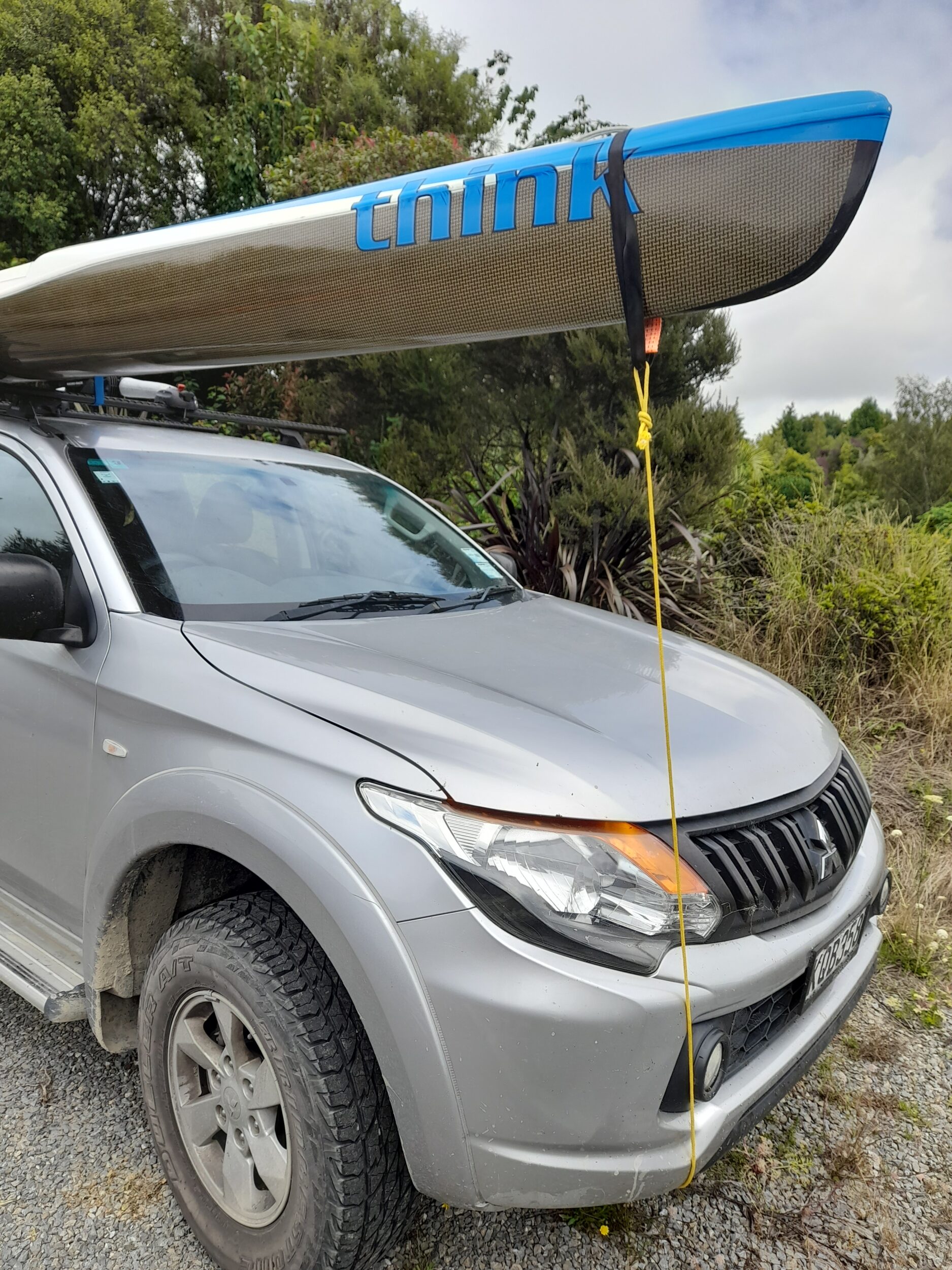
Reduce the amount of uplift on your roof rack
The wind resistance on your kayak (or board, waka-ama etc) creates an upward force. This uplift puts stress on your roof rack. Too much uplift and your roof rack can move or even come off your car. When the bow is tied down, the uplift is reduced as the kayak can only lift a small amount before the bow line becomes tight.
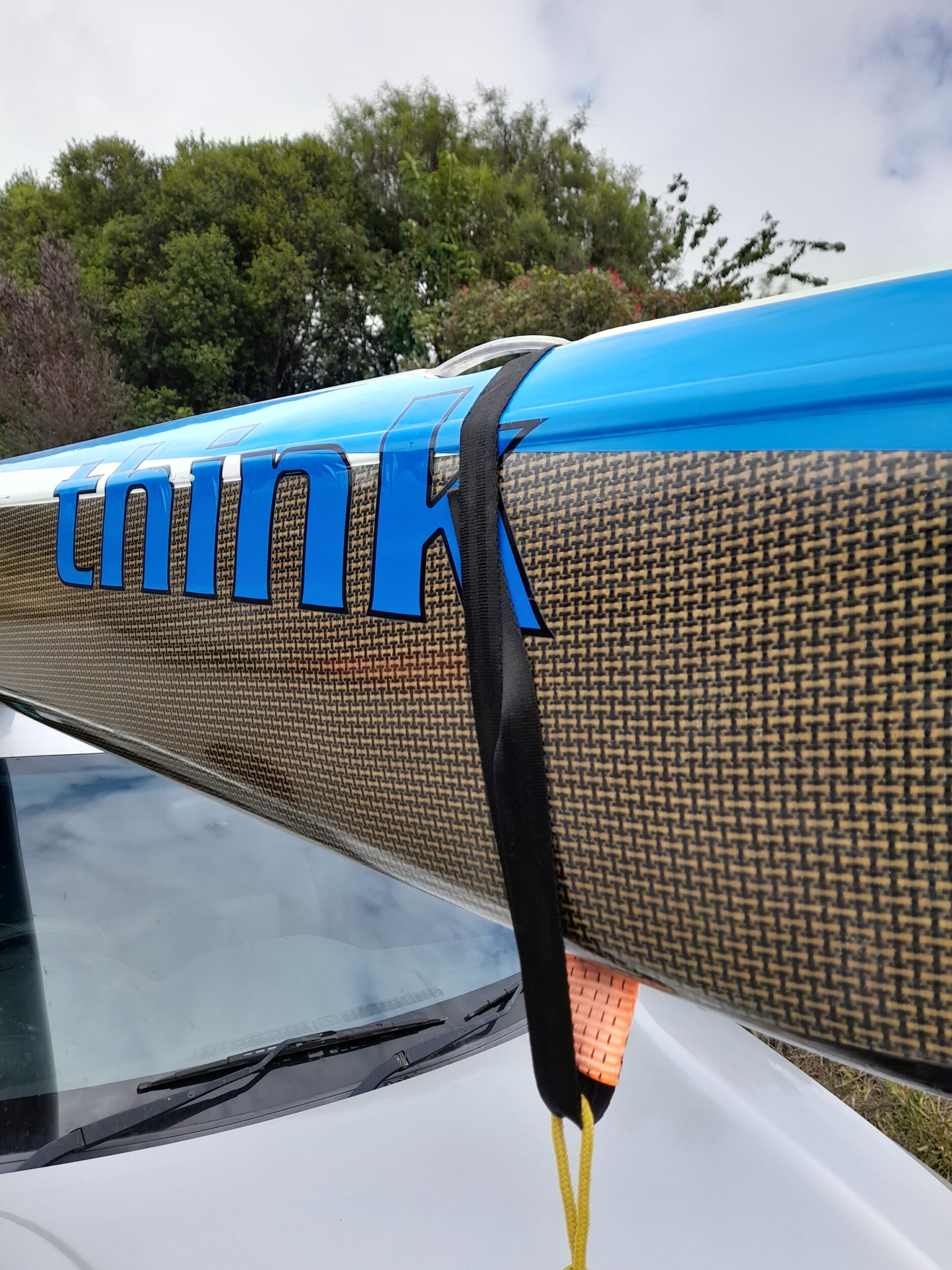
Reduce the movement of your kayak
If you have a longer kayak (surfski, multisport kayak, waka ama or sea kayak), hopefully you are carrying it in a suitable carrier. When the kayak is tied down, it should feel secure and have no movement. However, when driving, it is not uncommon to see a small amount of movement. Where does this movement come from? It is to do with the uplift previously mentioned. When the bow of the kayak is allowed to lift, you are reducing how well the kayak is sitting within your kayak carriers. This allows the kayak to move side to side. With a 5-6m long kayak, this movement can be quite noticeable and disconcerting.
To prevent this movement, use a bow and stern line. Tying the front and back of your kayak ensures it remains seated in your kayak carriers and reduces the amount of ‘see-sawing’ the kayak can do.
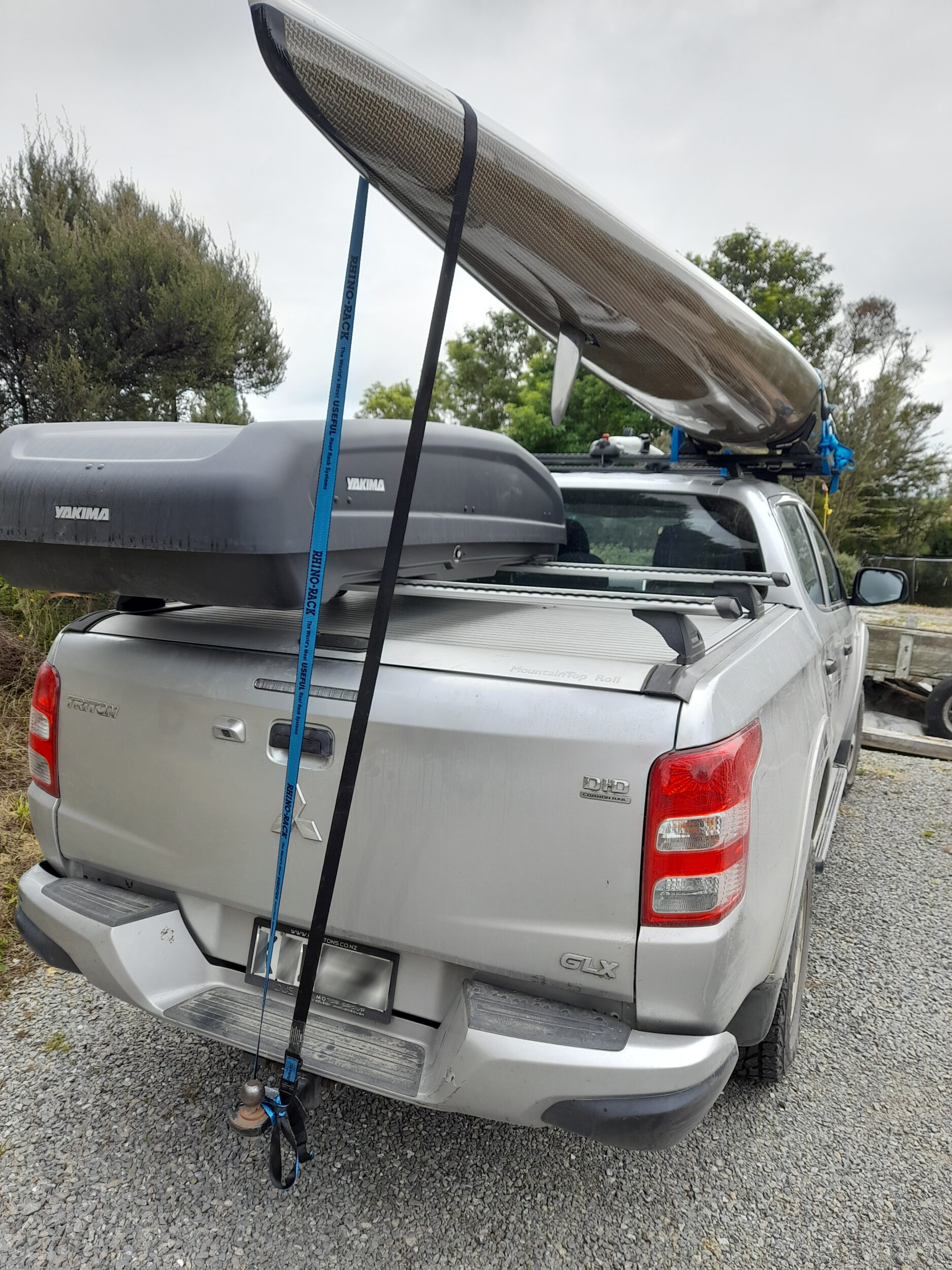
To act as a failsafe
The third benefit to securing the bow and stern is to add a failsafe to the system. Having your tie downs or roof rack fail is unlikely. But should either happen, it could lead to some expensive damage. If the bow and stern are tied down, the kayak should not be able to move too far out of place. This gives you time to slow down and pull over.
What about extended carriers?
If you use a carrier with the front and rear carriers spread further apart (usually a 2m – 2.5m spacing) then you’ve taken a great step to ensure that your kayak will move less when it’s being transported. While you’ve reduced the stress on your kayak, the uplift on your roof rack hasn’t reduced. Your roof rack will have exactly the same stress placed on it. Even if you have this style of carrier, it’s still worth tying the bow and stern to the vehicle.
How tight to tie the bow and stern?
The amount of tension in the bow and stern tie down system is really important. If there is not enough tension, the kayak can move too much before the cord (or tiedown) is tight enough. And this won’t achieve what we want. Instead, begin tightening until you feel the cord (or tiedown) has no slack left. At this point, the kayak isn’t being pulled down. But, if you try and lift the bow or stern, it will feel like there’s no upwards movement. If you want to test the effectiveness of you system, start with the cord (or tiedown) slack and see how much upwards movement there is in your kayak. Add tension and test again. Keep going adding tension until you feel like the upwards movement has been removed.
But, be aware that you can use too much tension. Your goal is not to pull the ends of the kayak down. It’s to prevent them from being able to move upwards. If you pull the ends down too much, you will put stress on the kayak.
Where do I attach to on my car?
There are two aspects to take into account
- Where is the best place to attach (relative to the kayak), and
- What is available on the car to attach to.
The best location is vertically below where the cord (or tiedown) is attached to your kayak. The further off vertical, the less effective it is.
There are several places you can attach a bow or stern line. But, most cars will not have all of these options
- Tie down point on the underside of the vehicle.
- Tow eye (you will need to screw the towing eye into place first)
- A secure point under the bonnet / boot
- Use a bonnet anchor
How to attach to the kayak?
The cord (or tiedown) should go over the kayak, and it’s best to not have it attached directly to a handle. You need to make sure that it cannot move forward or backwards on the kayak. The easiest way to do this is to run the cord (or tiedown) over the kayak, threading it through a handle. If you kayak does not have a handle, or anything to thread through, you will need to tie a length of cord back to your roof rack. This will prevent the bow / stern line from being able to slip off the front of the kayak.
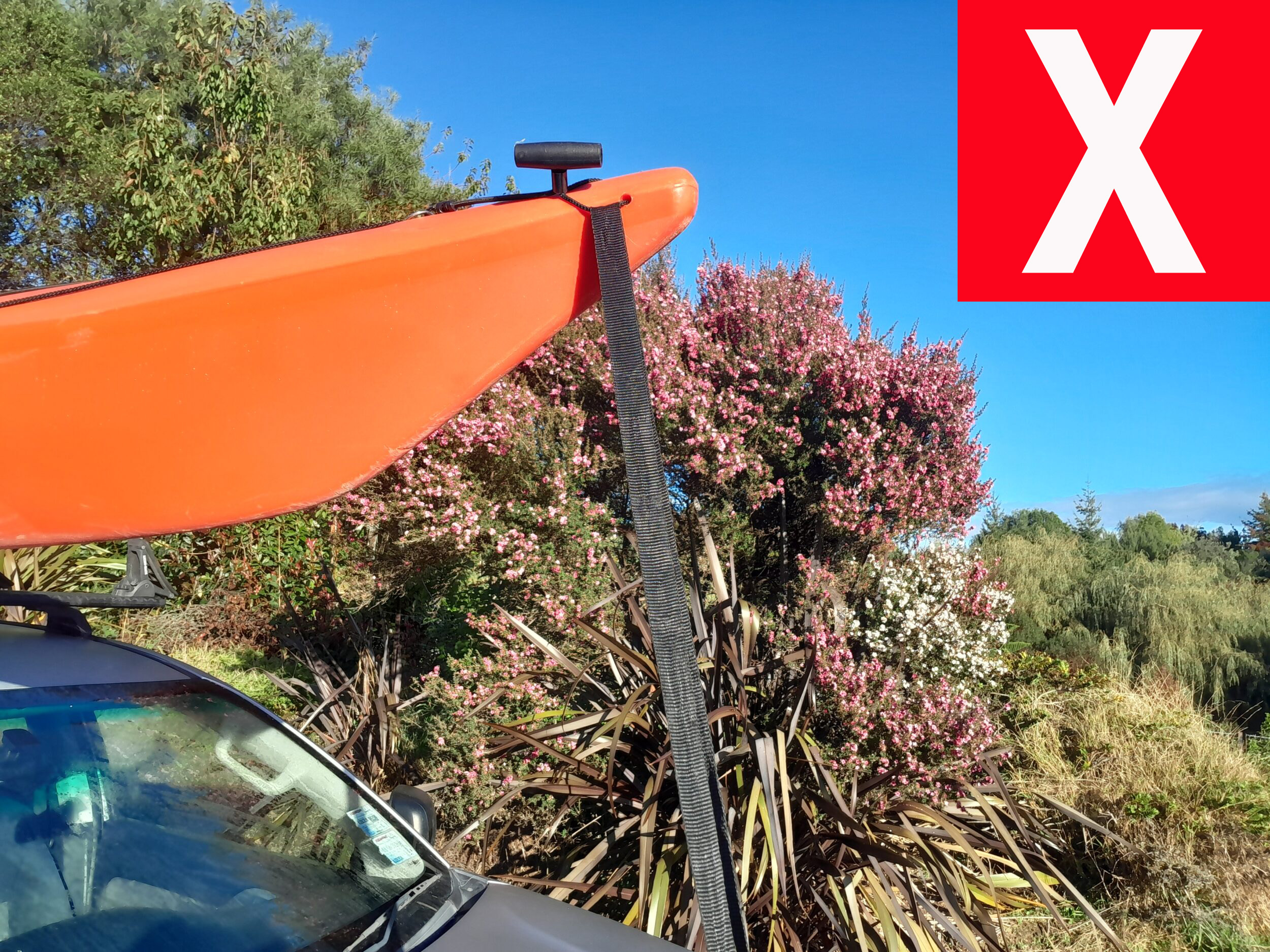
Do not thread the bow tiedown through the handle. In many kayaks the handle is not attached securely enough to the kayak to take the forces that might be involved.
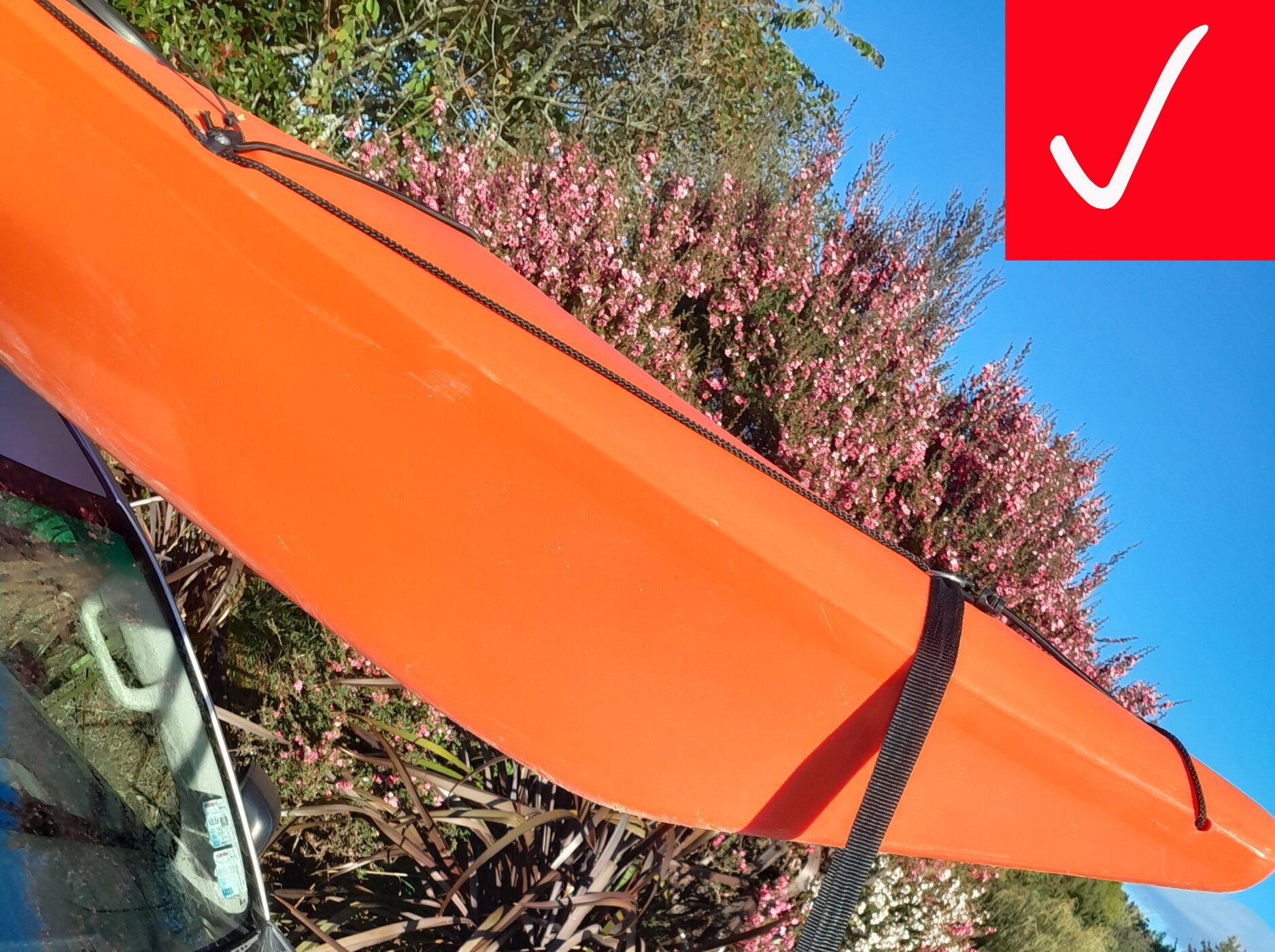
You can avoid putting stress on the handle by running the tie down strap over the kayak. You may still need to run the strap through the carry handle, but the handle is only locating the strap. It is not being stressed. You can also run the tie down strap under deck lines or other deck fittings to ensure that it cannot slip off the front of the kayak.
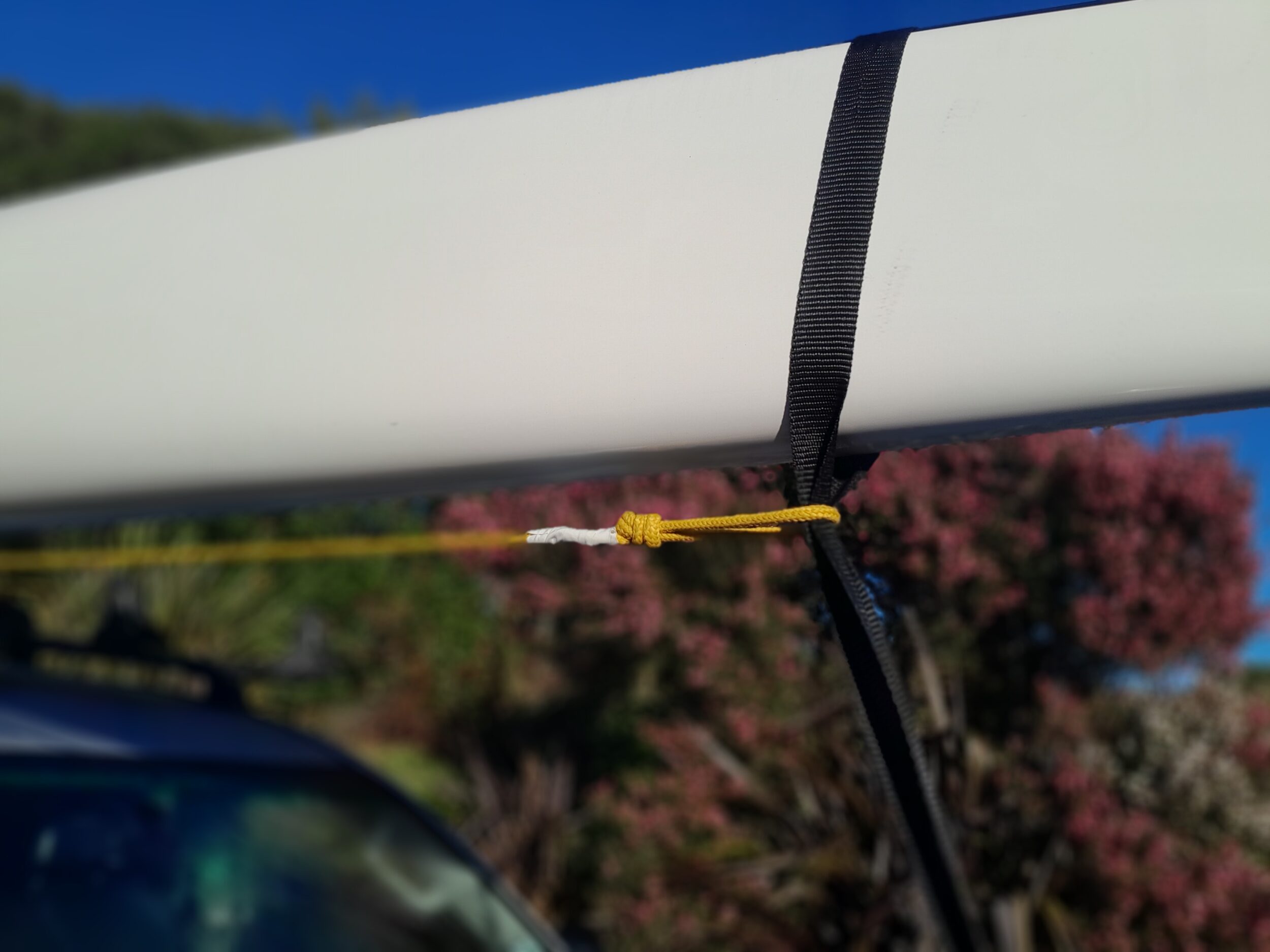
If your kayak does not have a front handle, or have anything to prevent the bow tiedown from slipping off, you can run a length of cord back to the roof rack. This ensures that the tiedown will not slip off the front of the kayak.
What to use to tie down the bow and the stern?
- The first requirement is that it is non-stretch. Anything that stretches will not give the benefits that we are hoping to achieve. Don’t use bungy cord / shock cord or old bike tubes.
- The simplest thing is a tiedown strap which is long enough to go over your kayak and reach the attachment point on your car. These are strong, non-stretch and easy to use. Their main drawback is that they can be distracting to the driver if the strap is in their vision.
- A length of cord works well, as long as you are happy tying knots. Use non-stretch cord. But, cord has a drawback. If there’s a little bit of movement in the cord, it can gouge a groove in softer materials (such as polyethylene kayaks). The way to avoid this is to use a length of webbing that goes over the kayak and then attach cord to this.
- You can purchase ready made bow / stern tie down systems. These often use a one-way pulley. Pull to tighten and then release the tension by pulling on a small lever.
Anything else to be aware of?
You do not want anything coming loose. Make sure you tie knots or secure webbing so that it can’t loosen. And, cut materials so that there is no excess. The last thing you want to do is to drive over some cord that came loose and dangled in front of your car’s wheel.
Please note: This was written to assist people who are carrying longer kayaks (typically 5m or longer). So it will apply to sea kayakers, surfski paddlers, multisporters and waka ama paddlers. If you paddle a recreational kayak, or a sit on top, some of the points may not apply. If you are not 100% confident in securing your kayak, please seek further advice before driving anywhere.
If you need to purchase any accessories to carry your kayak, please have a look at what we have available here.
Related Posts


Comments (0)