
When you are transporting your kayak on a roof rack, it is important that it…
Rudder vs Skeg
This is one of the great campfire conversations in the sea kayak world. Which is better – a skeg equipped kayak, or one fitted with a rudder?
Rudder

Here in New Zealand, you will find most kayaks are fitted with a rudder. A rudder allows you to steer the kayak using foot controls, making it easy to control the kayak. This is helpful for those who are new to paddling, as well as when paddling longer kayaks such as doubles. This is the main advantage of a rudder and it’s certainly an important benefit.
However, rudders do have disadvantages. They are slightly more complicated than a skeg, as they have more parts. The other main disadvantage is that the majority of rudders hang off the stern of the kayak. When paddling in rough conditions, the rudder will often be half (or more) out of the water. This reduces how effective the rudder is. In these situations, the paddler needs to use alternative methods to control the direction of their kayak.
Advantages of a Rudder
- A rudder helps with tracking and steering
- Paddlers can get by knowing fewer strokes (although it’s still a good idea to have the ability to steer the kayak using paddle strokes and edging)
Disadvantages of a Rudder
- A rudder had several moving parts, so can break. And, a broken rudder (or rudder cord) will have an impact on how the kayak will paddle, especially in kayaks which really rely on the rudder for tracking and/or steering.
Skeg
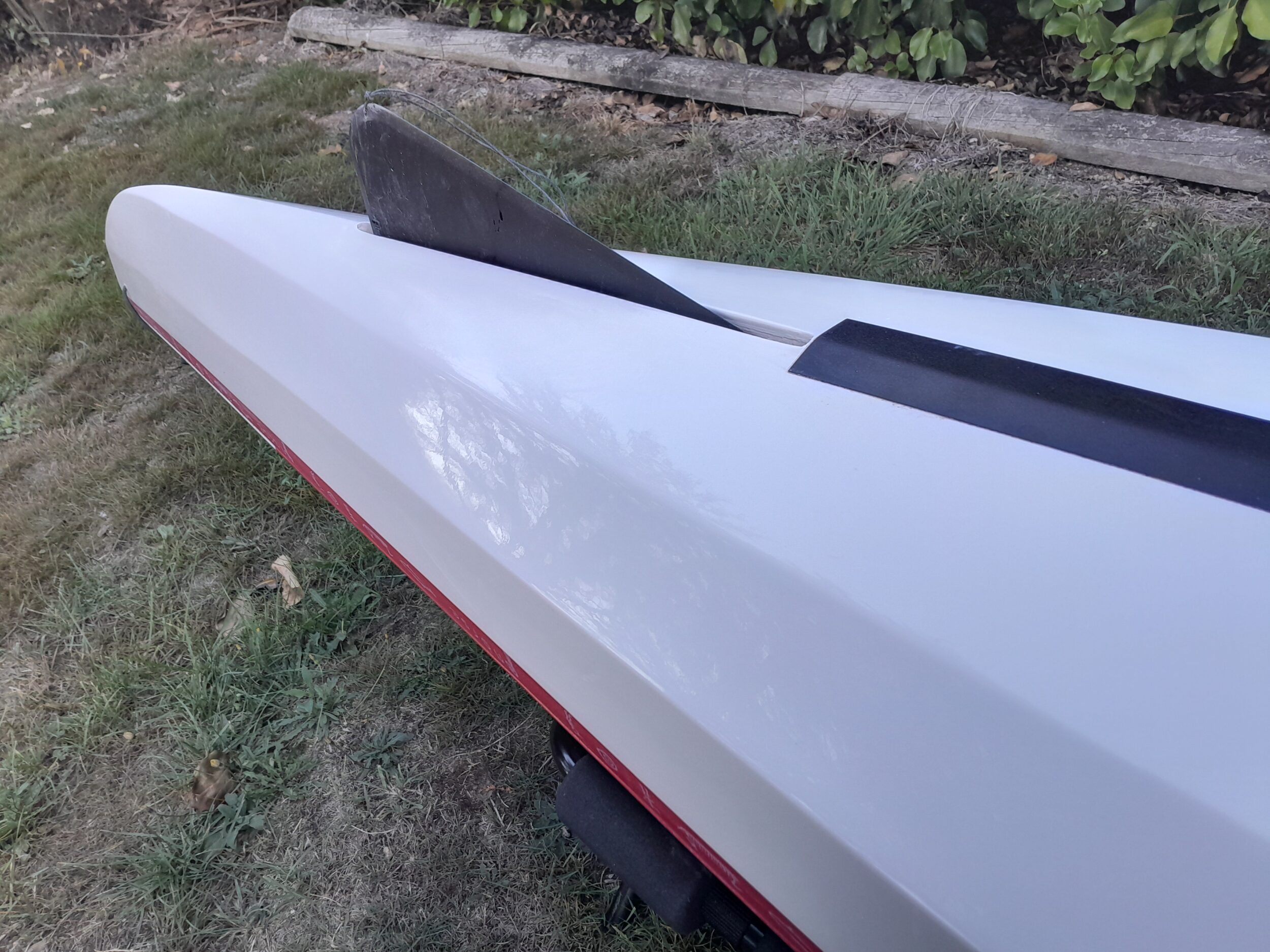
At first glance, a skeg might look very similar to a rudder, but a skeg is a fixed ‘fin’ on the hull of a kayak. It does not pivot. On modern sea kayaks, they can be lowered and raised as required. The purpose of the skeg is not to make the kayak track in a straight line, but to minimise how much the kayak will turn in the wind. When a kayak does not have a skeg deployed the kayak will turn into the wind when it is moving forwards. A skeg can be used to combat this effect. If you are paddling into the wind, keep the skeg retracted and let the kayak face into the wind. But, if you want to paddle downwind, fully lower the skeg and the kayak will be naturally inclined to keep pointing downwind. You can vary the amount the skeg is lowered when you are paddling with the wind on the side of your kayak. Alter the amount the skeg is deployed until the kayak is tracking in the direction you want it to.
As there is no rudder to turn the kayak, changes in direction need to be done using paddle strokes and / or by edging the kayak. While these are skills that all sea kayakers should have, some paddlers prefer to use a rudder as their primary method to steer the kayak.
A skeg is a simple device and therefore has very little that can go wrong with it. And, a kayak fitted with a skeg has a clean, minimalistic appearance. This will appeal to many paddlers.
A kayak that has a skeg fitted needs to have some specific traits. It needs to paddle straight when sitting flat, yet turn easily when put on edge. While these are good traits in any kayak design, they become much more important when a kayak does not have a rudder.
Skegs do have a few drawbacks. The skeg blade retracts into the hull of the kayak, reducing the storage space in the rear hatch. Skegs can also get jammed. If a small stone is trapped between the skeg blade and the housing, the skeg may not deploy when you require it. If you try to force the skeg to deploy when jammed, you can also kink the stainless steel cable that controls the skeg blade (however this only applies to kayaks that use a stainless steel cable). The operation of the skeg will be compromised until a new wire is fitted.
Handy Tip: Fit a short length of cord to the end of the skeg blade. If you feel the skeg will not deploy, do not force the skeg control slider. Instead, pull ashore, or ask a friend to pull the cord on the skeg blade to deploy it.
Advantages of a Skeg
- A skeg helps control the tracking of a kayak when windy. And it will work well in a range of conditions including when there is a chop or swell.
- A skeg is a fairly simple system, so is less likely to fail. And, if it does fail, your kayak is likely to still be able to be paddled without too much trouble.
- Many people find this style of kayak more visually appealing.
Disadvantages of a Skeg
- A kayak fitted with a skeg will have reduced storage space in the rear hatch.
- Skegs can jam and in the worse case scenario the control wire can kink
- Paddlers need to have competent paddle strokes and be comfortable using edging to turn the kayak.
Which is best for me?
There is no one-size-fits-all answer to this. Both systems have advantages and disadvantages. Some kayaks even have a skeg and a rudder fitted.
Here are some things to consider.
- Do you even have a choice? If you find a kayak that you like, then the decision has sort-of been made for you. Fitting a skeg or a rudder to a kayak which does not have the provision for it, is a fairly involved job.
- Are you a paddler who enjoys being on the water and simply sitting back and just paddling? Or, are you more of an active paddler and enjoy having more of a role in your kayaking. Paddling in a skeg equipped kayak is a more involved experience. You need to be constantly aware of what the kayak is doing and respond accordingly.
- Do you like a kayak that’s a little bit different? In NZ, kayaks with a skeg are a bit of a novelty, so you can paddle something that you don’t see every day.
- Remember, not all kayaks will suit a skeg. For example, if you want to paddle a fast and sleek sea kayak, then it’s going to have a rudder fitted. A kayak like this is designed to paddle well in a straight line, so it’ll need a rudder in order to turn well.
Regardless of whether you paddle a kayak with a skeg or a rudder, make sure you understand how your gear works. Do you know how to fix it, have you got the skills required to paddle it and do you know how to get the most out of it? As with any gear, a good thing to ask yourself is “does this make my paddling experience more enjoyable?” If it does, then it’s a worthwhile investment.
Related Posts


Comments (0)